
Newspaper Crafts for Adults at Home: 15 Creative Projects Using Old Newspapers
Old newspapers are easy to overlook. Once the headlines have been read and the pages are no longer needed, they often end up in a recycling bin or a forgotten pile. But newspaper is surprisingly useful as a craft material. It can be rolled, folded, woven, twisted, layered, torn, shaped and painted.
That makes newspaper crafts for adults at home an interesting hobby for anyone who enjoys making useful or decorative objects without constantly buying specialist supplies.
You can turn old newspaper into baskets, flowers, wall decorations, gift packaging, paper beads, organizers, collages and other handmade projects. Some require only scissors and glue, while others become more involved as you develop your skills.
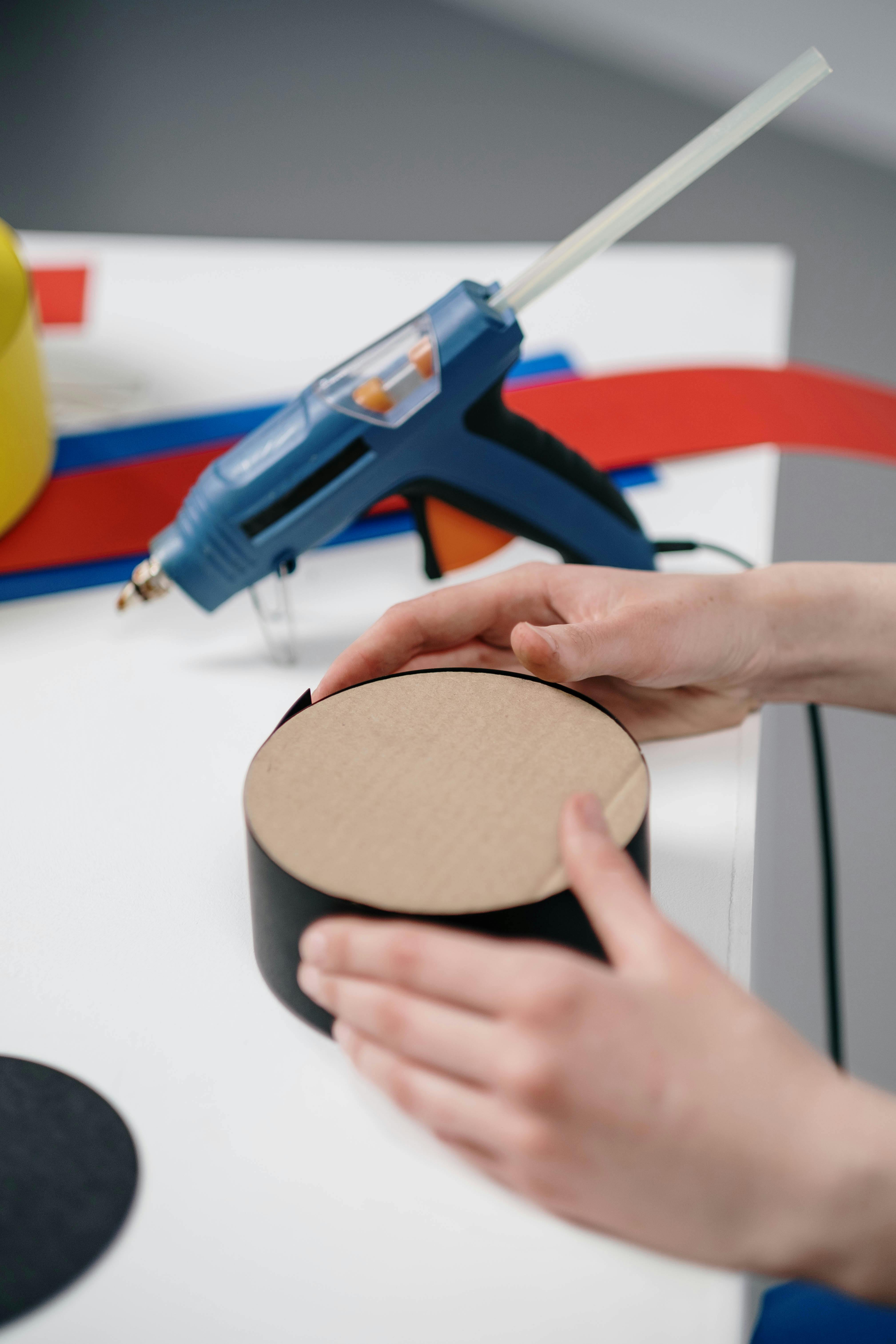
Image: Pexels, free-to-use craft photograph. View source on Pexels.
The appeal is not only about saving money. Newspaper crafts encourage you to look at an ordinary material differently. A page that once carried yesterday's news can become the texture of a handmade basket or the background of a piece of wall art.
This guide focuses on projects that can work well for adults and beginners, while also explaining the techniques behind them. Instead of simply giving you a long list of craft names, you will learn how to choose suitable paper, prepare it, make stronger structures, avoid common mistakes and develop your own projects.
Why Newspaper Is Such a Useful Craft Material
Newspaper has several characteristics that make it useful for creative projects.
It is lightweight, flexible and easy to cut. When several layers are combined, however, it can become considerably stronger. Rolled newspaper strips can also behave differently from flat sheets, which opens up additional possibilities.
Another advantage is that the printed words become part of the visual character of the finished piece. You do not always need to cover them with paint. Headlines, columns and black-and-white text can create an interesting vintage or graphic appearance.
Current craft resources continue to feature newspaper and recycled paper as versatile materials for projects ranging from decorative pieces to functional objects. :contentReference[oaicite:1]{index=1}
Newspaper is inexpensive
If you already receive newspapers or have access to old copies, the primary material costs nothing.
It is easy to experiment with
You can test an idea using a single sheet before committing to a larger project.
It works with other materials
Newspaper can be combined with cardboard, fabric, thread, paint, paper, glue and other suitable craft materials.
It encourages creative limitations
When you restrict yourself to one material, you are forced to think about shape and construction rather than relying on expensive decorations.
Basic Materials You Need
You do not need a large craft room to begin. A small collection of everyday tools is enough for many beginner projects.
| Material or tool | Useful for | Beginner note |
|---|---|---|
| Old newspaper | Almost every project | Use clean and dry pages. |
| Scissors | Cutting strips and shapes | Keep them sharp and clean. |
| Glue | Joining paper | Choose an adhesive appropriate for paper. |
| Ruler | Measuring strips | Helpful for baskets and woven projects. |
| Pencil | Marking shapes | Use light marks where possible. |
| Cardboard | Creating stronger bases | Old packaging can work well. |
| Paint | Finishing and decorating | Optional for many projects. |
| Small brush | Applying paint or adhesive | A basic brush is enough initially. |
How to Prepare Old Newspapers Before Crafting
Good preparation makes newspaper crafts much easier.
1. Select clean pages
Choose pages that are dry and reasonably clean. Avoid pages contaminated with food, liquids, chemicals or other substances.
2. Flatten folded sheets
Lay the pages flat for a while. If the paper has been tightly folded, flattening it first makes measuring and cutting easier.
3. Separate thick inserts
Newspapers sometimes contain glossy advertising inserts or heavier paper sections. These may behave differently from ordinary newsprint.
4. Decide how you will use the paper
Do not cut everything into strips immediately. A large flat sheet is useful for collage, paper wrapping and layered artwork, while narrow strips are better for weaving and rolling.
5. Keep a scrap container
Small offcuts can become useful later. Store them in a box rather than throwing them away after every project.
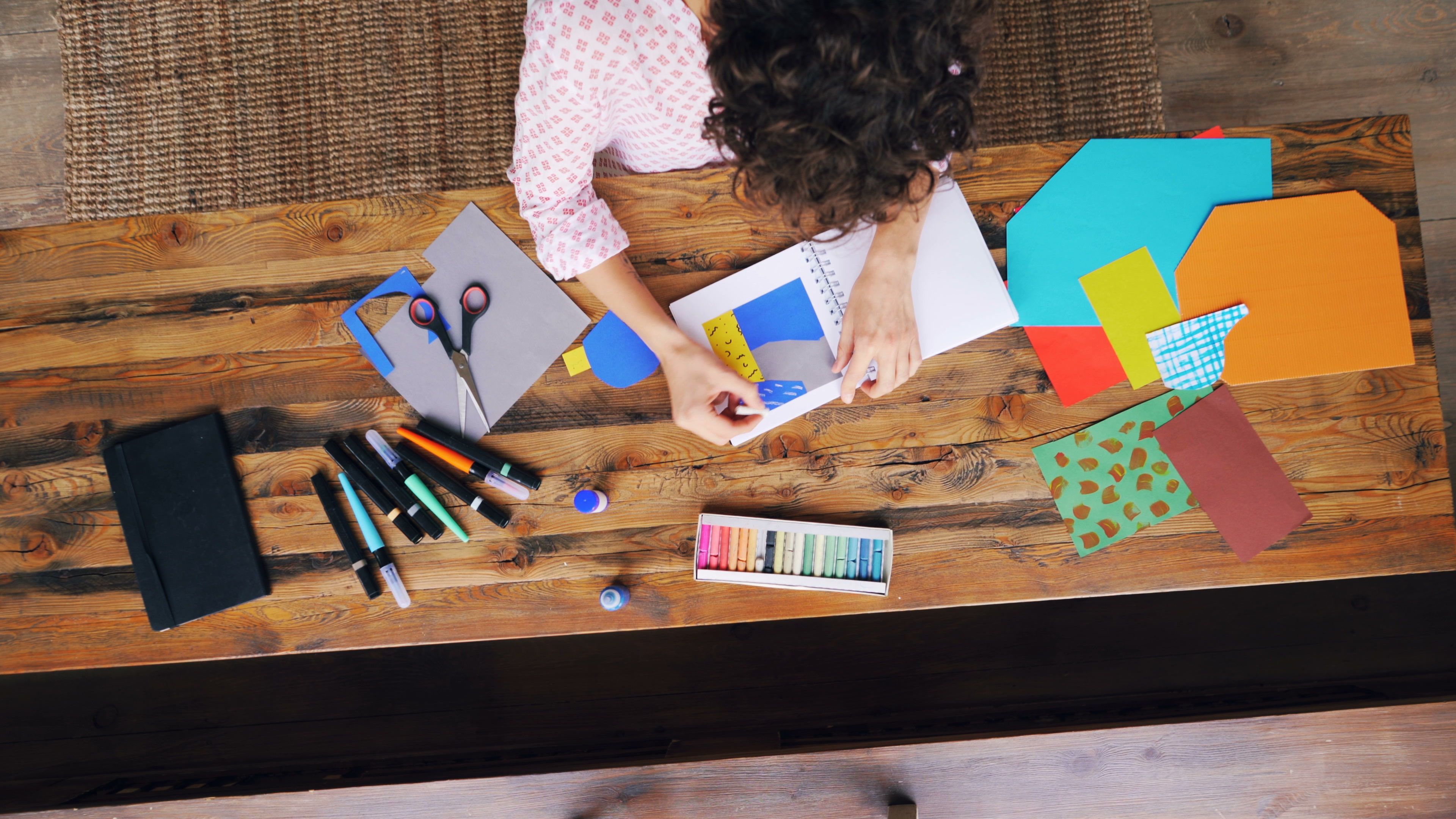
Image: Pexels. View source on Pexels.
15 Newspaper Crafts for Adults at Home
The following projects are arranged from relatively simple ideas toward techniques that require more patience. You do not have to complete them in order.
1. Rolled Newspaper Pencil Holder
A pencil holder is a useful first project because it introduces one of the most important newspaper techniques: rolling.
Cut newspaper into long strips and roll each strip tightly around a thin cylindrical object. Keep the roll firm while securing the end with a small amount of adhesive.
Once you have enough paper tubes, arrange them vertically around a suitable cardboard base. Attach them securely and allow the structure to dry.
You can leave the printed newspaper visible for a recycled-paper appearance or paint the finished holder.
Best for: beginners who want a useful desk accessory.
2. Newspaper Paper Beads
Paper beads are small, lightweight and surprisingly versatile.
Cut long triangular strips of newspaper. Starting at the wide end, roll each strip tightly around a thin stick or similar tool. Add a small amount of adhesive near the final edge to hold the shape.
After the bead has dried, you can experiment with different lengths and shapes.
Paper beads can be used for decorative strings, bookmarks or other craft projects where the material is appropriate.
Try combining newspaper beads with plain colored paper to create contrast.
3. Newspaper Wall Collage
If you enjoy visual art more than construction, collage is probably one of the easiest newspaper crafts to try.
Choose a theme before cutting. You might create an abstract composition, a cityscape, a portrait silhouette, botanical shapes or a typography-inspired design.
Tear some pieces and cut others. The difference between clean geometric edges and rough torn edges can make the composition more interesting.
Arrange everything before applying glue. Take a quick photograph of the arrangement so you can remember the placement.
4. Newspaper Flowers
Newspaper flowers can be used as individual decorations or combined into a larger arrangement.
Start with simple petals rather than complicated flower designs. Cut several similar shapes, layer them and attach the centers.
For a more natural appearance, gently curve the paper instead of leaving every petal completely flat.
Paint the edges if you want to introduce color while keeping some of the newspaper visible.
5. Woven Newspaper Basket
This is a more advanced project, but it teaches an important construction technique.
Cut newspaper into long strips and fold or roll them to increase their strength. Create a basic framework and weave additional strips over and under the structural pieces.
The tighter and more consistent your weaving, the more stable the basket is likely to become.
Do not rush this project. If the first few rows are uneven, stop and correct them before continuing.
Beginner challenge: Start with a very small basket rather than a full-size storage container.
6. Newspaper Gift Wrapping
You do not always need to transform newspaper into a permanent object.
Use attractive newspaper pages as creative gift wrapping. Add a simple paper flower, string, handmade tag or small decorative element.
Choose pages based on their visual appearance. A page with interesting typography can look more intentional than one covered with random advertisements.
This is one of the quickest ways to turn an everyday material into something useful.
7. Handmade Newspaper Bookmarks
Bookmarks are ideal for using narrow newspaper scraps.
Cut a strip of sturdy paper or recycled cardboard. Cover it with newspaper and smooth the surface carefully.
Trim the edges after the adhesive has dried. Add a small piece of string if desired.
For extra durability, use a suitable protective finish compatible with paper.
8. Newspaper Tube Wall Decoration
Roll several newspaper strips into tubes and arrange them into circular, geometric or floral patterns.
Experiment with different tube lengths. Short tubes can create compact patterns, while longer tubes can form larger shapes.
Lay out the entire design before gluing.
This prevents you from discovering halfway through the project that the composition does not fit the available wall space.
9. Newspaper Mosaic Art
Instead of using small pieces of glass or ceramic, create a paper mosaic.
Cut newspaper into small squares, triangles or irregular shapes. Arrange them on a contrasting background.
You can keep the natural black-and-white newspaper appearance or introduce small areas of colored paper.
For adults who enjoy detailed work, this can become a surprisingly absorbing weekend project.
10. Rolled Newspaper Coasters
Roll narrow strips of newspaper tightly and arrange the rolls into circular or geometric shapes.
The key is consistency. Loose rolls can create weak spots, while extremely tight rolls may be difficult to form.
Once assembled, use an appropriate finish if the completed object needs additional surface protection.
Remember that newspaper is paper. Do not assume an untreated newspaper coaster is waterproof.
11. Newspaper Picture Frame Decoration
Start with a plain cardboard frame or a suitable existing frame.
Cover selected areas with rolled strips, folded paper or collage pieces.
You can create a monochrome newspaper frame or combine newspaper with colored paper for contrast.
This is particularly useful when you want a craft project that incorporates something you already own.
12. Newspaper Paper-Mâché Bowl
Paper-mâché is a classic way to transform thin paper into a more substantial form.
For a basic bowl, use an appropriate reusable form as a temporary mold and apply prepared paper strips with a suitable paper-mâché adhesive mixture.
Build several thin layers rather than trying to create one very thick layer immediately.
Allow the project to dry thoroughly between stages. Drying time depends on the material, thickness, temperature and humidity.
Once completely dry, remove the form and decorate the bowl if appropriate.
13. Newspaper Leaf Garland
Cut leaf shapes from newspaper and arrange them along string or thread.
Mix several leaf shapes rather than making every piece identical.
For an autumn-inspired appearance, lightly add suitable paint or colored pencil to selected areas.
This is a good project for leftover newspaper because the individual pieces can be small.
14. Newspaper Storage Box
A small storage box can combine cardboard construction with newspaper decoration.
Use sturdy cardboard to create the basic structure. Cover the outside with newspaper strips and smooth them carefully.
Pay special attention to corners because poorly attached paper can lift as it dries.
Once dry, the box can be used for lightweight items such as craft scraps, notes or stationery.
15. Newspaper Sculpture
If you want a more artistic challenge, try creating a small sculpture.
Begin with a simple form: an abstract figure, bird, flower, face or geometric shape.
Shape newspaper into loose forms, secure the structure and gradually add layers.
The objective is not necessarily realism. Newspaper sculpture is an opportunity to explore volume, texture and balance.
Four Newspaper Techniques Worth Learning
Rather than memorizing dozens of projects, learn a few basic techniques. Once you understand them, you can invent your own projects.
Technique 1: Rolling
Rolling turns flat newspaper into tubes or coils.
Tight rolls are useful for structures and decorative pieces. Looser rolls can create softer visual forms.
Technique 2: Folding
Folding gives paper more structure without adding another material.
Try folding strips into repeated sections before using them in a project.
Technique 3: Weaving
Weaving involves crossing strips over and under one another. It is particularly useful for baskets, panels and decorative mats.
Consistent strip width makes the final pattern easier to control.
Technique 4: Layering
Layering involves placing several pieces of paper over one another.
This can increase thickness and create visual depth. Paper-mâché is one example of this broader approach.
How to Make Newspaper Crafts Look Less Like Newspaper
Some people love the printed appearance. Others prefer a cleaner finished object.
If you want to reduce the newspaper look, consider these approaches:
- Use a thin coat of suitable primer where appropriate.
- Paint the completed surface.
- Cover selected sections with plain paper.
- Combine newspaper with colored cardstock.
- Use only pages with visually attractive typography.
- Create a deliberate monochrome design instead of trying to hide every word.
There is no need to conceal the fact that your craft began as newspaper. The printed texture can actually be the feature that makes the project distinctive.
How to Choose the Best Newspaper for a Project
Different newspaper pages can behave differently.
For folding, thinner pages may be easier to manipulate.
For structural work, several layers or tightly rolled strips may be preferable.
For collage, look for pages with interesting contrast, photographs, typography or large blocks of color.
| Project type | Paper characteristic to consider |
|---|---|
| Collage | Interesting text, images and contrast |
| Paper beads | Thin, flexible sheets |
| Weaving | Consistent strips |
| Paper-mâché | Paper that tears and absorbs adhesive well |
| Flowers | Flexible pages that fold without cracking |
| Decorative covering | Pages with attractive printed patterns |
Common Beginner Mistakes With Newspaper Crafts
Using too much glue
Excess adhesive can make paper wrinkled and slow the drying process.
Start with a small amount and add more only when necessary.
Working with wet or dirty paper
Moisture and contamination can make newspaper difficult to handle and may cause unpleasant odors or poor adhesion.
Use clean, dry material.
Making strips inconsistent
In weaving projects, strips with dramatically different widths can make the pattern uneven.
Measure and cut carefully when consistency matters.
Skipping the drying stage
Paper may appear dry on the surface while remaining damp inside multiple layers.
Give thicker projects adequate time to dry before painting or adding additional layers.
Starting with an enormous project
A huge newspaper basket or sculpture may look exciting online, but a beginner can learn more efficiently from a small version.
Complete something small first.
How to Keep Newspaper Crafting Almost Cost-Free
The newspaper itself can often be sourced from material that would otherwise be discarded. But adhesives, paint and tools can still add up.
A simple budget strategy is to divide supplies into three categories:
Use what you already own
Newspaper, cardboard packaging, old notebooks, pencils and basic scissors may already be available.
Buy only reusable tools
A good ruler or pair of scissors can serve many projects. Avoid purchasing single-purpose accessories until you have a reason to use them repeatedly.
Reuse leftovers
Keep paper strips and small offcuts in a labeled container.
A piece that seems useless for one project may be perfect for a tiny detail in another.
How to Create a Small Newspaper Craft Station
You do not need an entire room.
A small box containing your essential tools can be enough.
Consider keeping:
- Prepared newspaper strips
- Flat newspaper sheets
- Scrap paper
- Cardboard pieces
- Scissors
- Ruler
- Pencil
- Glue
- Small paintbrush
- Finished-project storage bags or boxes
Keeping supplies together removes one of the biggest barriers to starting a hobby: preparation.
Pexels craft workspace photograph. View the free image on Pexels.
How to Develop Newspaper Crafting Into a Long-Term Hobby
A hobby becomes more interesting when you stop repeating the same beginner project and start experimenting.
After completing several projects, choose one technique to improve.
For example:
- Week one: practice tight paper rolls.
- Week two: experiment with weaving.
- Week three: create layered artwork.
- Week four: combine two techniques.
You can also create themed projects.
A vintage newspaper collection might include a basket, picture frame and wall decoration. A nature-inspired collection could combine newspaper leaves, flowers and botanical collage.
Giving your projects a common theme can make the hobby feel more purposeful.
Newspaper Crafts as Handmade Gifts
Handmade gifts do not need to be expensive.
A newspaper bookmark can accompany a book. A small decorated box can hold a personal note. A paper flower can become part of gift wrapping.
The strongest handmade gifts usually have some connection to the recipient.
For someone who loves reading, make a bookmark. For someone who enjoys organization, make a small desk container. For someone who likes wall art, create a framed collage.
Personal relevance often matters more than complexity.
How to Photograph Your Newspaper Crafts for Your Blog
If you want your craft hobby to become content for a blog, photograph the process as well as the final product.
Take pictures of:
- The original newspaper.
- The prepared strips.
- The first construction stage.
- A close-up of an important technique.
- The nearly finished project.
- The final result in a realistic setting.
This gives readers something that generic stock photography cannot provide: evidence of the actual process.
For a blog, original process photographs can also make a tutorial substantially more useful because readers can compare their own work with each stage.
Safety Tips for Newspaper Crafts
Most newspaper projects are relatively simple, but ordinary craft tools still require care.
- Use scissors carefully.
- Keep craft knives on a suitable cutting surface.
- Follow adhesive manufacturer's instructions.
- Provide ventilation when using products with strong fumes.
- Keep paints and adhesives away from food-preparation areas.
- Keep small pieces away from young children and pets.
- Wash hands after working with adhesives, paints or other craft products.
If you use old containers or recycled materials with sharp edges, clean and prepare them properly before incorporating them into a project.
7-Day Newspaper Craft Challenge
If you want to turn this idea into a real hobby rather than simply reading about it, try a seven-day challenge.
Day 1: Paper Beads
Make five beads and experiment with different strip widths.
Day 2: Bookmark
Create one practical bookmark using newspaper and cardboard.
Day 3: Collage
Create an abstract composition from torn newspaper.
Day 4: Paper Flowers
Make three flowers using slightly different petal shapes.
Day 5: Paper Tubes
Practice rolling newspaper into consistent tubes.
Day 6: Small Organizer
Use cardboard and newspaper to create a small desk container.
Day 7: Your Own Design
Combine two techniques and create something that was not included in this guide.
The final day is important. Copying tutorials teaches technique, but designing your own project teaches creative problem solving.
Frequently Asked Questions
What can I make with old newspapers?
You can make paper beads, flowers, baskets, wall art, bookmarks, gift wrapping, collages, decorative tubes, organizers, paper-mâché objects and many other projects.
Are newspaper crafts suitable for adults?
Yes. Adults can approach newspaper crafting as a relaxing creative hobby, a budget-friendly DIY activity or a way to experiment with recycled materials.
What is the easiest newspaper craft for beginners?
Collage, bookmarks, simple paper flowers and basic paper beads are good starting points because they require relatively little construction.
Can newspaper be used to make baskets?
Yes. Newspaper strips can be folded or rolled and then woven into basket-like structures. Start with a small basket because consistent tension and strip placement take practice.
How do I make newspaper stronger?
Strength can be increased through rolling, folding, layering or paper-mâché techniques. The appropriate method depends on the object you are making.
Can newspaper crafts be painted?
Yes, although the result depends on the paper, adhesive, paint and surface preparation. Test your chosen combination on a scrap before painting a finished piece.
How long do newspaper crafts last?
The lifespan depends on construction quality, moisture, sunlight, handling and whether the piece has been protected appropriately. Keep paper crafts dry and away from prolonged direct sunlight.
Can I sell newspaper crafts?
You can potentially sell handmade crafts, but profitability depends on material costs, labor time, design originality, presentation, demand and local rules. Calculate your real time and expenses before setting a price.
Is newspaper crafting environmentally friendly?
Using an existing paper material creatively can be a useful form of reuse, but it is not automatically environmentally beneficial in every situation. Consider the full material life cycle, adhesives, paints, packaging and eventual disposal.
Final Thoughts
The most interesting thing about newspaper crafting is that the material looks ordinary until you start changing its form.
A flat sheet becomes a strip. A strip becomes a tube. A tube becomes a pattern. Several patterns become a basket, decoration or piece of artwork.
That transformation is what makes this hobby worth exploring.
You do not need expensive equipment, a dedicated studio or a large collection of craft supplies. Start with a few clean newspaper pages and one small project.
Learn how the paper folds. Learn how tightly it can roll. Learn how much adhesive is enough. Notice which shapes are strong and which ones collapse.
Then experiment.
The first project may not look perfect, and that is exactly why it is useful. Your second project will be informed by the first. By the time you reach your fifth or sixth project, you may find yourself designing objects rather than simply following instructions.
That is the point where newspaper stops being something you were about to throw away and becomes a genuine creative material.
Take one clean newspaper page, cut it into several strips, roll three of them tightly, and experiment with joining the rolls into a simple shape. You have already started learning the basic principle behind many newspaper crafts: transforming a flat, ordinary material into something with structure and purpose.