
25 Low-Cost Hobbies and Crafts You Can Start at Home
You do not need an expensive craft room or a shopping cart full of supplies to enjoy a creative hobby. Some of the most rewarding hobbies and crafts can begin with ordinary materials, a small workspace, and a little curiosity. From paper projects and journaling to drawing, embroidery, recycled crafts, and simple clay work, there are plenty of ways to make something without spending a lot of money.
Finding an affordable hobby is especially useful if you are trying something new for the first time. Instead of investing heavily in equipment before knowing whether you enjoy an activity, you can start with a small experiment. If you like the process, gradually develop your skills and supplies.
This guide focuses on practical, low-cost hobbies and crafts that can be adapted to different homes, schedules, and skill levels. The goal is not simply to give you another giant list of random DIY ideas. Instead, each hobby includes a reason it may suit you, what you can start with, and how to develop the activity once you become more comfortable.
Why Low-Cost Hobbies Can Be Better for Beginners
Starting cheaply is not about avoiding quality. It is about reducing unnecessary commitment while you discover what you actually enjoy.
Imagine buying every tool associated with knitting, painting, pottery, or sewing before completing a single project. You might spend a considerable amount of money and then discover that you do not enjoy the activity.
A better approach is to test the basic experience first.
If the activity makes you curious about learning more, then additional supplies become an investment in an interest you already know you have.
This approach also encourages creativity. Having fewer materials can force you to experiment with what is already available instead of solving every creative problem by purchasing another product.
Quick Comparison of Affordable Hobbies and Crafts
| Hobby | Starting Cost | Space | Learning Curve |
|---|---|---|---|
| Journaling | Very low | Very small | Easy |
| Drawing | Very low | Very small | Easy to start |
| Origami | Very low | Very small | Easy to moderate |
| Collage | Low | Small | Easy |
| Embroidery | Low | Very small | Moderate |
| Knitting | Low | Small | Moderate |
| Clay modeling | Low | Small | Easy to moderate |
| Upcycling | Very low | Small to medium | Easy to moderate |
Costs vary considerably depending on where you live, what materials you already own, and the quality or type of supplies selected.
1. Start a Simple Journaling Hobby
Journaling is one of the easiest creative hobbies to begin because the basic equipment can be extremely simple: paper and something to write with.
You can turn journaling into a creative craft by experimenting with handwriting, borders, sketches, paper scraps, small illustrations, lists, and personal observations.
You do not need to create an elaborate journal spread every day. A page containing three sentences and one small drawing can be enough.
A simple first project
Choose one page and divide it into three sections: something you noticed, something you learned, and something you want to remember.
Add a small drawing or decorative border if you want to make the page more visual.
2. Try Paper Collage
Collage is an excellent choice if you want to make visual artwork without learning traditional drawing techniques first.
Old magazines, packaging, paper bags, newspapers, envelopes, leftover wrapping paper, and printed materials can become part of a collage.
The interesting part is deciding how individual pieces work together.
Try a limited-color collage
Choose two or three colors and search your existing paper materials for pieces that match. Arrange them into a composition before gluing anything down.
This simple restriction can make an ordinary collection of paper scraps look much more intentional.
3. Learn Basic Origami
Origami is particularly convenient for small homes because it requires very little storage space.
A few sheets of paper can provide hours of practice. Start with simple folds and repeat them until the movements become comfortable.
Once you understand basic folding concepts, you can move toward more complicated models.
4. Keep a Sketchbook
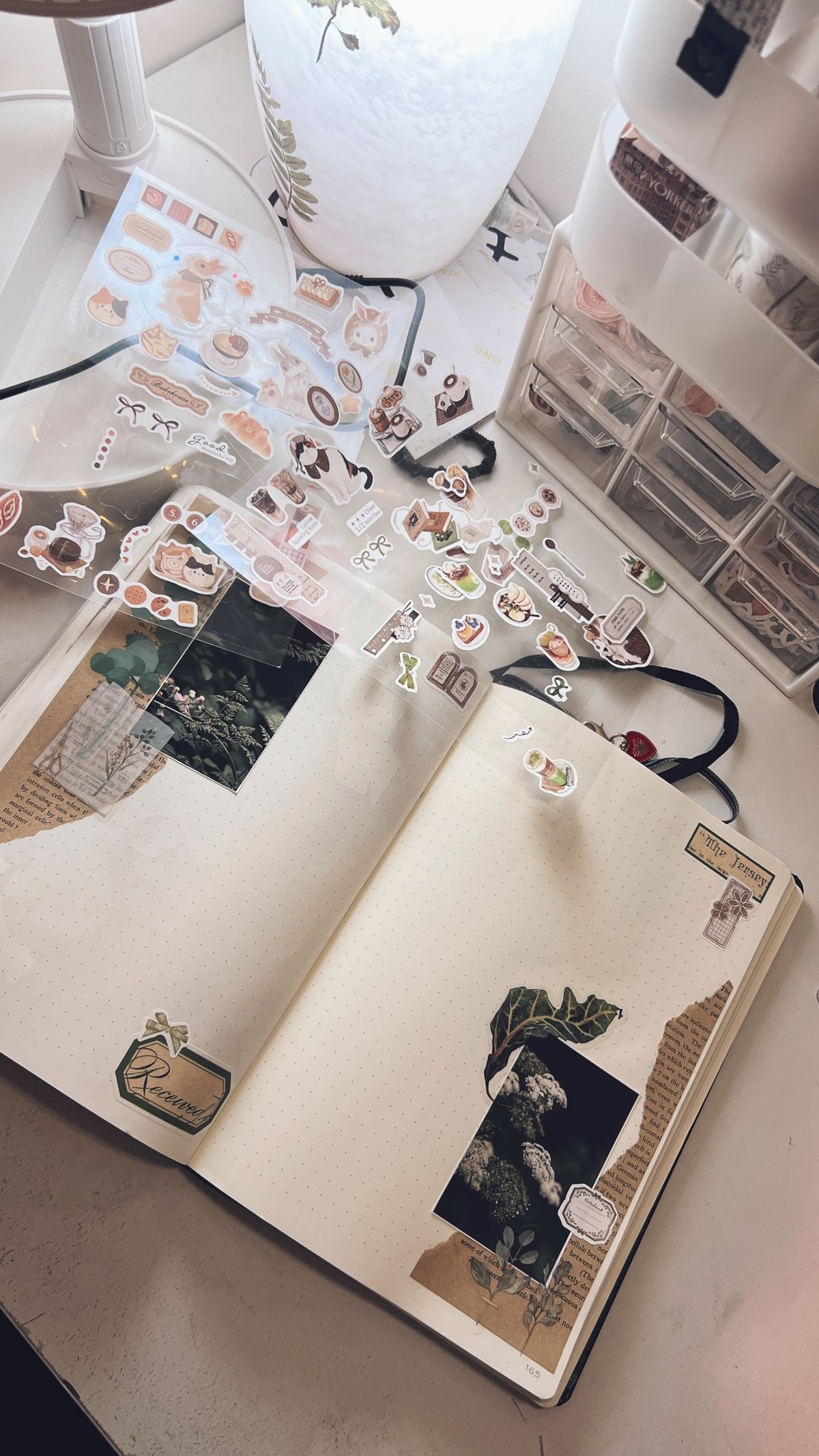
A creative journaling workspace with stickers and scrapbooking materials. Image source: Pexels.
A sketchbook can become a private practice space rather than a gallery of finished artwork.
Draw everyday objects: cups, shoes, plants, keys, bottles, bags, or furniture. The purpose is to train observation.
One useful exercise is to draw the same object several times from different angles. You will quickly notice which shapes are difficult for you.
5. Explore Hand Embroidery
Embroidery is a compact craft that can be surprisingly inexpensive to explore.
A basic needle, thread, suitable fabric, and hoop can provide the foundation for learning several stitches.
Rather than immediately attempting a detailed portrait or complicated floral design, create a sampler.
Draw several lines and practice different stitches. Label each one in your notebook.
This gives you a reference you can return to when beginning future projects.
6. Try Beginner Knitting
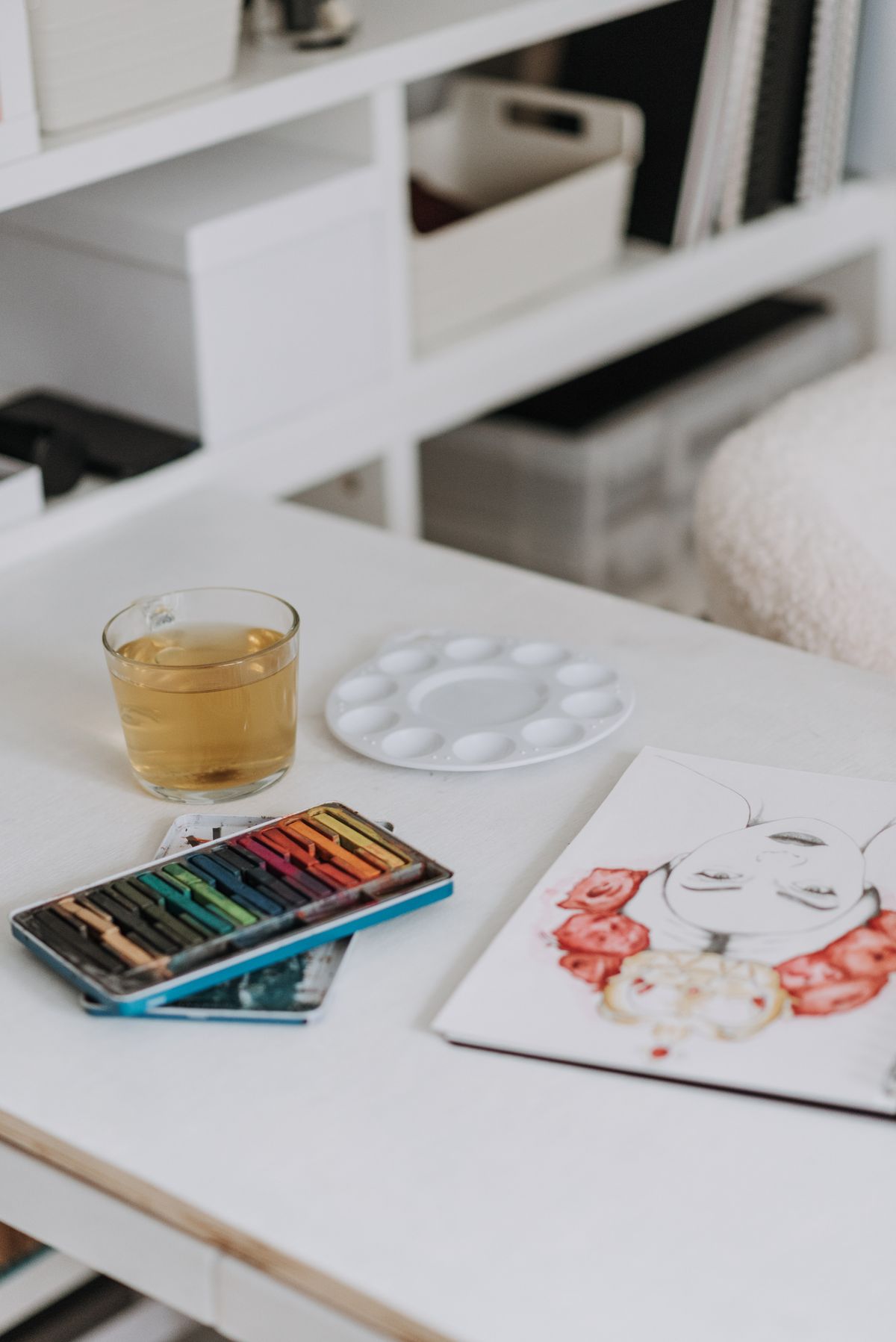
A sketchbook and art supplies arranged for creative practice. Image source: Pexels.
Knitting can look intimidating because finished garments often involve many techniques. The beginner experience can be much simpler.
Start by learning how to hold the yarn and needles comfortably and practice basic stitches.
A small square can teach you about tension, stitch formation, counting, and consistency without requiring a large investment of time.
Once the basic movement feels natural, you can decide whether you want to explore scarves, accessories, home decorations, or garments.
7. Experiment With Crochet
Crochet is another fiber craft that can start with a small amount of material.
One hook and yarn can be enough to practice basic stitches.
Small squares are useful beginner exercises because they can later become components of larger projects.
If you enjoy the repetitive nature of crochet, gradually explore more complicated patterns.
8. Make Recycled Paper Crafts
Before throwing away attractive packaging or paper, consider whether it can become craft material.
Boxes can become templates or organizers. Paper bags can become wrapping material. Small scraps can become collage pieces.
This kind of crafting changes the question from “What supplies should I buy?” to “What can I make with what I already have?”
That shift can produce some of the most interesting beginner projects.
9. Try Simple Clay Modeling
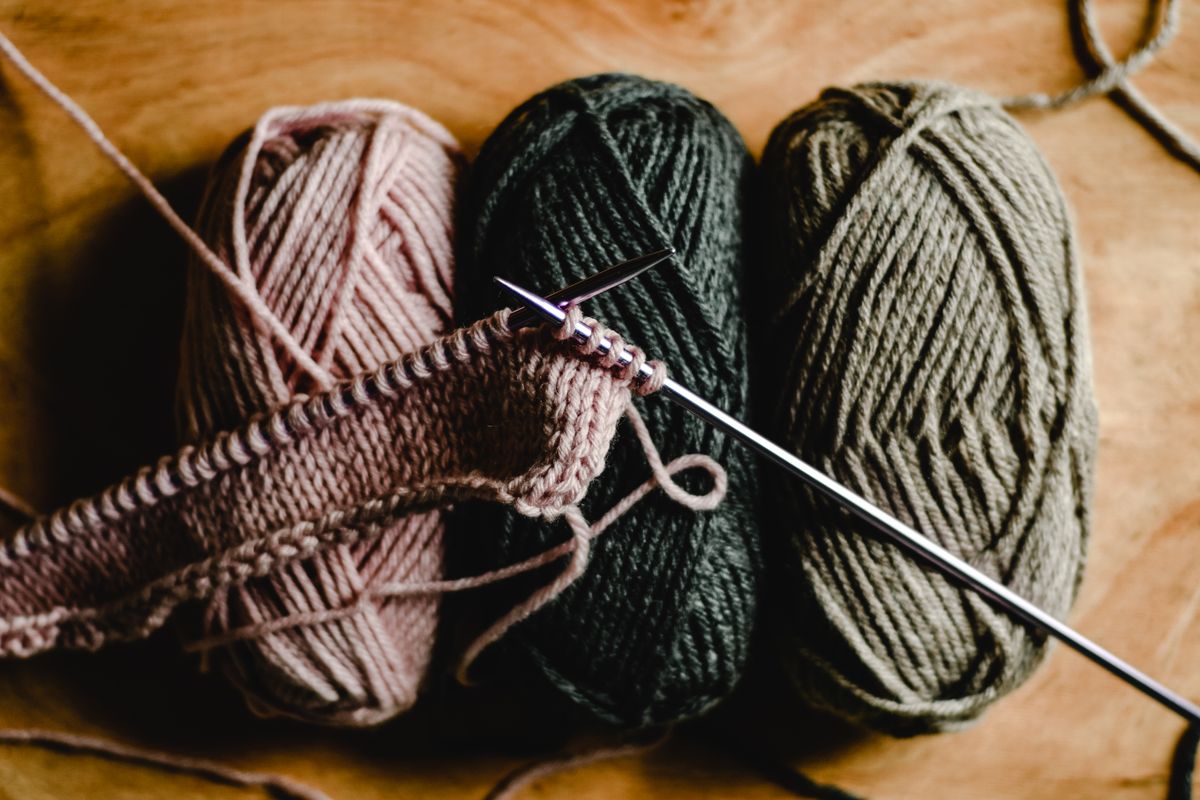
Yarn and knitting needles ready for a handmade project. Image source: Pexels.
Clay modeling can be explored through small hand-built projects using an appropriate clay product.
Try simple shapes such as leaves, small animals, abstract sculptures, or decorative tiles.
If you use air-dry clay, follow the manufacturer's curing and finishing instructions. If you want kiln-fired pottery, consider taking an introductory class at a ceramics studio rather than attempting to replicate professional firing at home.
10. Turn Empty Containers Into Organizers
Useful crafts can be particularly satisfying because the finished item has a job to perform.
Clean containers can become organizers for pens, brushes, thread, buttons, small tools, or other supplies.
Decorate them with suitable paper, paint, labels, fabric, or simple patterns.
The project can be as simple or detailed as you want.
11. Make Handmade Bookmarks
Bookmarks are ideal for beginners because they are small, useful, and easy to personalize.
Try watercolor, collage, hand lettering, pressed-paper designs, fabric, or embroidery.
You can also make several designs using leftover materials from other projects.
12. Explore Hand Lettering
Hand lettering combines drawing and writing.
You can start with an ordinary pen and practice different ways of forming letters.
Focus first on consistency, spacing, and line control rather than complicated decorative styles.
Once you become comfortable, experiment with greeting cards, journal headings, posters, labels, and handmade gift tags.
13. Create Handmade Greeting Cards
Making cards can turn a small creative session into something practical.
You can create cards for birthdays, thank-you messages, celebrations, or everyday encouragement.
Use cardstock, paper scraps, drawing tools, paint, or simple lettering.
Creating several cards during one session also gives you a useful supply for future occasions.
14. Try Fabric Scrap Crafts
If you have old fabric pieces available, do not immediately discard the small sections.
They can be used for patches, bookmarks, appliqué, small decorations, textile collages, or simple sewing practice.
Working with scraps also teaches an important design lesson: limitations can improve decision-making.
15. Make a Personal Memory Book
A memory book combines writing, paper craft, photography, and personal storytelling.
Choose a theme such as a trip, a year, a friendship, a collection of recipes, or memorable family moments.
Add photographs, handwritten notes, tickets, drawings, maps, or other paper items that are appropriate to preserve.
You do not need to fill an entire book at once. One page is enough to begin.
16. Try Simple Watercolor Exercises
Watercolor becomes much easier to understand when you treat it as a series of experiments instead of trying to paint a finished masterpiece immediately.
Practice gradients, color mixing, transparent layers, simple leaves, geometric shapes, and small landscapes.
Keep the exercises together so you can see your progress.
17. Explore Acrylic Painting
Acrylic painting can be approached through small studies rather than large canvases.
Try painting simple shapes and experimenting with layers.
One useful exercise is to create a small abstract composition using only three colors plus white, if appropriate for your materials.
The restriction makes you focus on composition rather than constantly choosing another color.
18. Start a DIY Inspiration Notebook
An inspiration notebook can become a bridge between collecting ideas and actually making things.
Write down project concepts, interesting color combinations, techniques you want to learn, sketches, supply lists, and lessons from finished projects.
The notebook itself can become a creative project.
19. Try Simple Paper Quilling
Paper quilling uses narrow strips of paper that are rolled and shaped into decorative designs.
Beginners can start with basic circles, spirals, leaves, and geometric forms.
Because the pieces are small, quilling is particularly suitable when storage space is limited.
20. Make DIY Gift Tags
Gift tags are another small project that can use leftover materials.
Cut tags from suitable cardstock and decorate them with handwriting, patterns, paper scraps, or simple illustrations.
Make a batch and store them for future gifts.
21. Create a Simple Paper Organizer
Folded paper or lightweight cardboard can be transformed into small organizers.
Try making compartments for notes, stationery, craft scraps, or other lightweight items.
The project can also teach basic measuring, folding, and construction.
22. Practice Decorative Doodling
Doodling is an accessible creative activity because it does not require a complicated goal.
Start with repeated lines, dots, leaves, circles, waves, stars, and geometric shapes.
Combine them into borders or fill sections of a page.
Over time, you may discover patterns that become part of your personal visual style.
23. Make an Upcycled Fabric Pouch
If you have suitable fabric and basic sewing knowledge, a small pouch can turn an unused textile into something practical.
Keep the first version simple. A straightforward rectangular shape is easier to manage than a complicated pattern.
Use the project to practice measuring, cutting, seams, and finishing.
24. Try Decorative Stone Painting
Smooth stones can provide a small surface for simple decorative artwork.
You can experiment with patterns, symbols, leaves, geometric designs, or abstract shapes.
Use appropriate paints and sealers for the intended purpose and follow product instructions.
Avoid presenting painted objects as suitable for uses they were not designed for.
25. Build a Weekly Craft Challenge
Instead of choosing one specific craft, create a weekly challenge.
For example:
- Week 1: Make something from paper scraps.
- Week 2: Draw an everyday object.
- Week 3: Create a handmade card.
- Week 4: Repurpose an empty container.
- Week 5: Try a new stitch.
- Week 6: Make a small clay object.
This approach lets you test different creative categories without making a large commitment to one hobby.
How to Choose the Best Low-Cost Hobby for You
The best choice depends less on what is currently popular and more on how you naturally like to work.
| If You Enjoy... | Consider Trying... |
|---|---|
| Quiet repetitive work | Knitting, crochet, embroidery |
| Writing and reflection | Journaling, memory books |
| Visual experimentation | Collage, painting, doodling |
| Precise folding | Origami, paper crafts |
| Working with your hands | Clay, textile crafts |
| Practical projects | Upcycling, organizers, sewing |
| Short creative sessions | Bookmarks, cards, doodling |
How to Avoid Overspending on Craft Supplies
Crafting can become expensive when buying supplies becomes the hobby instead of making things.
A simple purchasing system can prevent this.
Use the one-project rule
Before buying a new material, identify the project you intend to use it for.
Keep an inventory
Make a basic list of supplies you already own. Check it before shopping.
Use scraps creatively
Keep useful scraps in clearly labeled containers rather than allowing them to become an unmanageable pile.
Set a monthly hobby budget
A predetermined limit makes it easier to distinguish between supplies you need and supplies you simply want.
Borrow specialized equipment
If a project requires equipment you are unlikely to use regularly, consider whether a class, makerspace, library program, or community workshop provides access to it.
How to Make a Small Crafting Space Work
You can create a functional craft station without dedicating an entire room to your hobby.
A desk, dining table, shelf, or portable box can work.
The most important part is keeping materials organized and making setup simple.
Use portable storage
A container that holds the supplies for one project makes it easier to start and stop without leaving materials everywhere.
Separate unfinished projects
Give each unfinished project its own folder, bag, or container.
Keep frequently used tools accessible
Scissors, pencils, rulers, notebooks, and other common tools should be easy to reach.
How to Stay Motivated When a Craft Gets Difficult
Every hobby eventually reaches a frustrating stage.
Something that looked easy in a tutorial may suddenly feel complicated when you attempt it yourself.
When this happens, reduce the difficulty rather than abandoning the entire hobby.
Return to a basic exercise. Repeat the technique. Make a smaller version. Or temporarily switch to a project that uses a skill you already understand.
Progress is rarely a straight line.
Turning a Cheap Hobby Into a Valuable Skill
An inexpensive hobby can eventually become much more than a way to pass time.
Someone who begins sewing may learn clothing repair. A person who starts drawing may explore illustration. A journaler may discover an interest in bookbinding. A beginner knitter may eventually design original patterns.
The important transition is moving from following instructions to understanding principles.
Once you understand why a technique works, you can adapt it to new projects.
That is when a craft becomes a genuine skill.
A Simple 30-Day Crafting Plan
If you have been collecting hobby ideas without actually starting, try this four-week approach.
Week 1: Explore
Choose three different low-cost activities and spend a short session testing each one.
Week 2: Choose
Select the activity you enjoyed most.
Week 3: Practice
Repeat one basic technique several times instead of constantly searching for new projects.
Week 4: Finish
Create one small finished project.
At the end of the month, ask yourself:
- Did I enjoy the process?
- Did I enjoy learning the technique?
- Would I like to make another project?
- Do I want to learn a more advanced version?
If most answers are yes, you may have found a hobby worth developing.
Frequently Asked Questions
What is the cheapest craft to start at home?
Paper crafts, drawing, journaling, doodling, collage, and origami can often be started with inexpensive or already-available materials.
What hobby can I start without a craft room?
Journaling, drawing, embroidery, origami, crochet, knitting, collage, and other small crafts can be practiced on a desk or table.
How can I craft without buying lots of supplies?
Start with one project, use materials you already own, reuse suitable packaging, and expand your supplies only after discovering which techniques you genuinely enjoy.
What is a good creative hobby for someone who thinks they are not artistic?
Structured activities such as origami, basic embroidery, simple collage, journaling, or guided drawing exercises can provide a comfortable entry point.
Can hobbies and crafts save money?
They can sometimes reduce spending on entertainment or encourage useful skills such as basic repairs, but crafting itself can also become expensive. Setting a budget and using existing materials helps keep costs controlled.
How often should I practice a craft?
There is no universal schedule. Even a short weekly session can help you build familiarity with a technique. Consistency is generally more useful than occasional marathon sessions.
Should I finish one craft before trying another?
When you are exploring, trying several crafts is perfectly reasonable. Once you find an activity you enjoy, finishing small projects can help you develop the skills needed for more advanced work.
Final Thoughts
A creative hobby does not have to be expensive to be meaningful.
You can start with a sheet of paper, an old piece of fabric, a pencil, a needle and thread, a few scraps, or another simple material already available in your home.
The important part is beginning with a realistic project rather than waiting until you have the perfect equipment.
Choose something small enough to finish. Learn one technique. Make mistakes. Try again. Keep the parts that worked and change the parts that did not.
Over time, a simple experiment can turn into a genuine creative skill.
And perhaps the best thing about hobbies and crafts is that there is always another direction to explore. A small paper project can lead to bookbinding. A sketch can lead to painting. A few stitches can lead to sewing. A recycled container can lead to a larger interest in upcycling.